
How it works
Find the right people. Monitor them where it makes sense. Know what happens next.
MbeleMed connects population selection, outreach, monitoring, physician review, follow-up, and measurement into one connected pathway.
The technology coordinates the work. Qualified clinicians retain diagnostic and treatment authority.
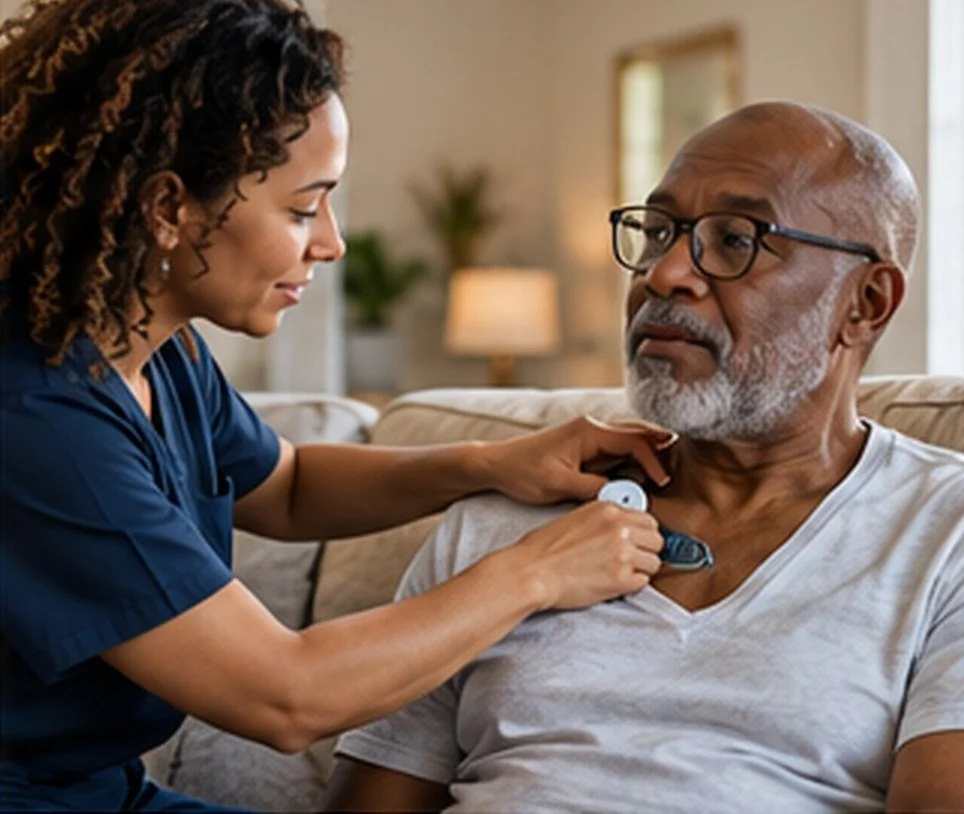

The six stages
- 01
Prioritize
Start with the people most likely to benefit.
Use approved clinical criteria and available longitudinal information to define the population and the reason for monitoring.
- 02
Reach
Make the pathway fit the person.
Coordinate outreach and monitoring through home, clinic, community, or mobile settings.
- 03
Monitor
Capture what a routine visit may miss.
Use an appropriate monitoring service selected for the population and protocol.
MbeleMed does not manufacture or own monitoring devices.
- 04
Review
Put a qualified physician between the signal and the clinical decision.
Potential findings are reviewed before clinical action proceeds.
The confirming physician's clinical review is independent of MbeleMed's commercial model.
- 05
Act
A finding is only useful if someone knows what to do next.
Support the agreed pathway for outreach, escalation, referral, further evaluation, and follow-up.
MbeleMed does not diagnose, prescribe, or treat.
- 06
Measure
Know what happened.
Track completion, physician-confirmed findings, follow-up, utilization, and agreed program outcomes.
Where monitoring can happen
Bring the pathway closer to the person.
Wherever care happens, the pathway stays connected.
- HomeMeet people where they are.
- ClinicFit the pathway into existing care.
- CommunityReach trusted local settings.
- MobileExtend across sites and geographies.
Home
Monitor without requiring another specialty visit.
Clinic
Integrate monitoring into an existing primary-care, population-health, or specialty pathway.
Community
Reach people through trusted settings that may be easier to access than traditional specialty care.
Mobile
Extend the pathway across geographies, partner sites, and mobile care settings.
Alerts
When timing matters, the pathway can be built around it.
Where the selected monitoring service and protocol support it, near real time alerts can be incorporated into the escalation pathway.
The program defines:
- who receives the alert;
- what counts as an escalation;
- who reviews the finding;
- who contacts the person;
- what happens in an emergency.
- SIGNAL
- PHYSICIAN REVIEW
- NEXT STEPagreed pathway
Who does what
Clear ownership protects the person at the center of the pathway.
- Population criteria
- Partner / protocol authority
- Outreach and deployment
- Partner and MbeleMed operations
- Monitoring service
- Applicable monitoring provider
- Professional interpretation
- Qualified physician
- Treatment and clinical decisions
- Applicable care team
- Claims submission
- Applicable provider / billing entity
- Program measurement
- Joint under the applicable agreement
- Research use
- Separate approvals and data rights
A good pilot starts with the pathway, not the device.
Define the population, access model, clinical owner, monitoring approach, actionable finding, follow-up pathway, and evidence question before launch.